Cabling & Bracing
Weak V-shaped unions, co-dominant stems, and storm-stressed limbs do not always mean the tree has to go. Properly installed cables and brace rods can hold a good tree together through decades of Missouri wind and ice, and we will tell you honestly when that is the smarter move than removal.
5.0 average from 57+ Google reviews
Some trees just need help holding themselves together
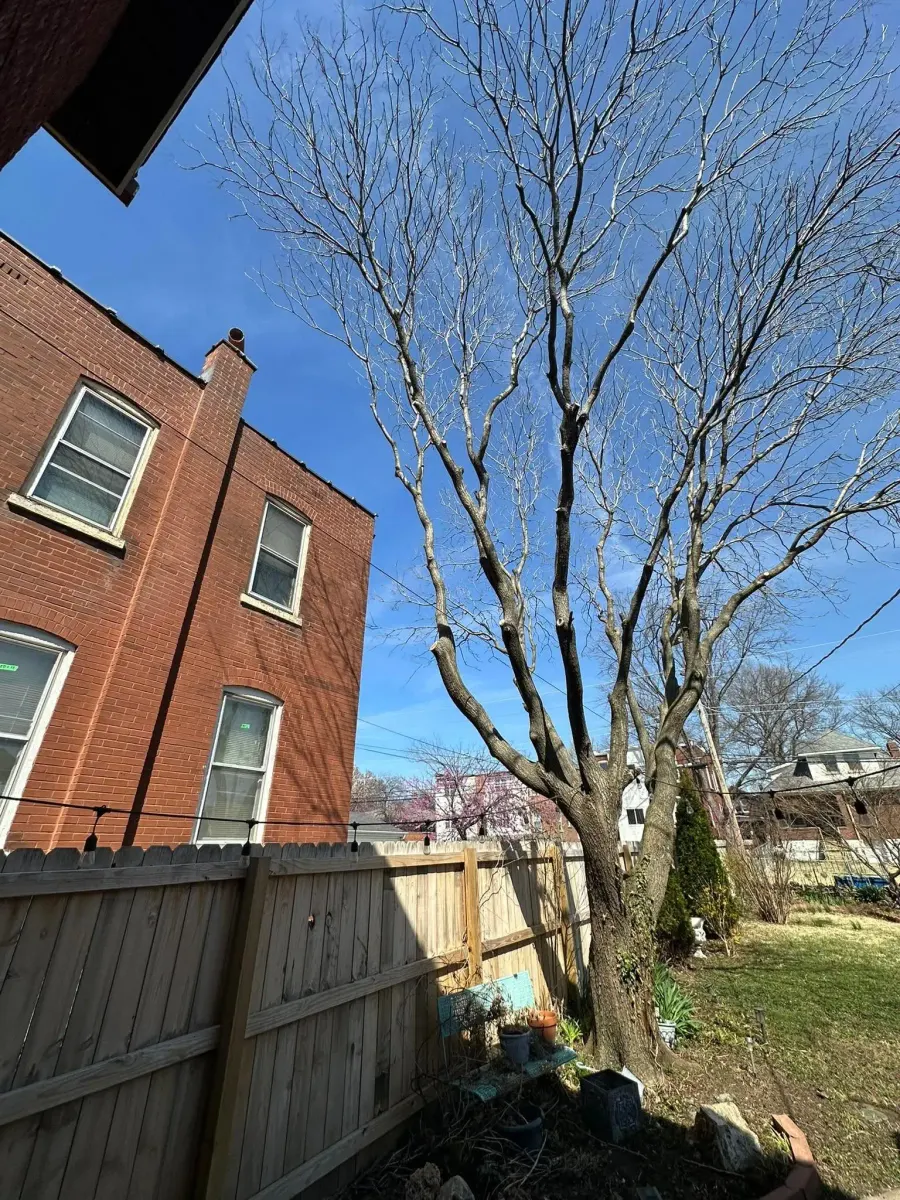
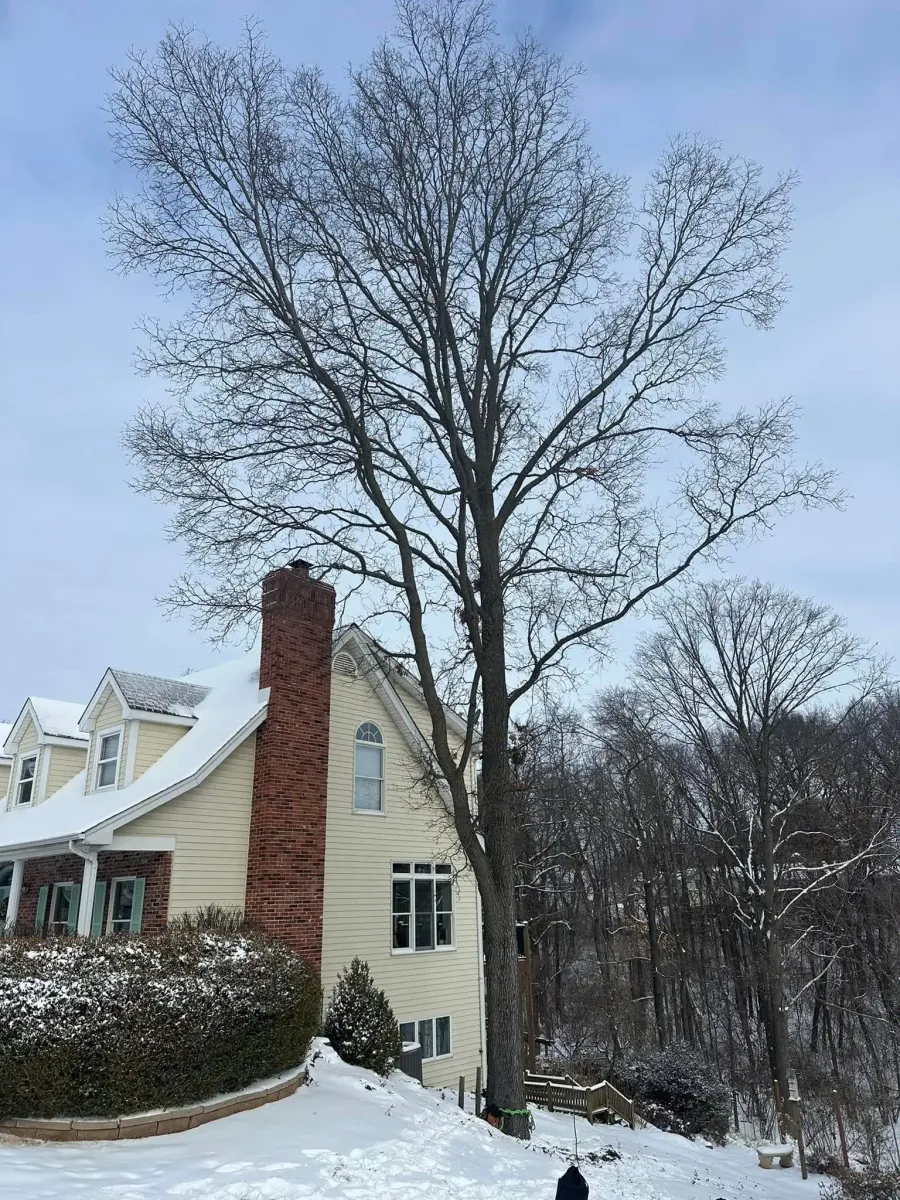
A big shade tree with a weak fork is not automatically a removal. On the properties we work in St. Charles and St. Peters, we see mature oaks with two co-dominant stems, silver maples with tight V-shaped unions full of included bark, and Bradford pears that were born wanting to split. When the wood is otherwise healthy, a cable set high in the canopy limits how far those stems can move apart in a storm, which is usually all the tree needs to keep standing for decades.
Baylor climbs every candidate tree and looks at the union up close before quoting anything. If the crotch is already cracked or the wood is decayed, we will tell you cabling is throwing money at a tree that is going to fail anyway. But when the structure is sound and the tree is worth keeping, a properly installed support system costs a fraction of a removal and lets you keep the shade you waited forty years for.
Preservation first
We cable trees to save them, and we only recommend it when the tree is actually worth saving. Otherwise we say so.
Set high in the canopy
Cables go in the upper third of the canopy where they belong, placed by hand at the right height and angle.
Built for Missouri storms
Hardware sized for ice load and summer wind gusts, the two forces that split trees around here.
How we handle it
- 1.
Assess the union
We climb or inspect the fork up close, check for cracks, decay, and included bark, and tell you straight whether support makes sense.
- 2.
Choose the system
Dynamic cable, static cable, brace rods, or a combination, matched to the tree's condition and how much it needs to move.
- 3.
Install high and tight
Hardware goes in at roughly two-thirds of the way up the stems, anchored properly so it strengthens the tree instead of wounding it.
- 4.
Prune and schedule the re-check
We reduce weight on the supported limbs, then set a plan to inspect the system every few years and after major storms.
What this covers
Dynamic cabling
A slightly elastic rope system that lets the stems move naturally in normal wind but catches them before they overload. Our usual choice for healthy trees with weak forks.
Static cabling
Steel cable that firmly limits movement, used when a union is already compromised and the tree cannot afford much flex.
Brace rods for split crotches
Threaded rods installed through a fork that has started to separate, holding the split closed while the cable above takes the load.
Co-dominant stem support
The classic mature-oak problem: two trunks of equal size fighting each other. A cable between them keeps a windstorm from picking a winner.
Post-storm inspection and re-tensioning
After ice storms and summer blowdowns we check existing systems, re-tension what needs it, and replace hardware that took a hit.
Weight-reduction pruning
Smart crown reduction on the supported limbs, because the best cable in the world works better with less leverage against it.
Why St. Charles trees split, and which ones
Freeze-thaw winters, ice storms, and violent summer wind are hard on weak unions, and our local species list does not help. Bradford pears and silver maples grow fast with tight forks full of included bark, which is why half of them lose a leader by age twenty. Even good trees like pin oaks and white oaks develop co-dominant stems that get heavier and riskier every year.
We install and inspect support systems across St. Charles County and the St. Louis metro, from Cottleville and O'Fallon out to Chesterfield and Wildwood. One thing we always explain up front: cables are not forever. They get inspected every few years and after major ice, and hardware eventually gets adjusted or replaced as the tree grows. We keep track of that with you so the system keeps doing its job.
What neighbors say about this work
5.0 average from 57+ Google reviews
Heather Hanson
“Baylor and the boys did an awesome job removing a dead tree from my front yard and deadwooding a few others. They were fast and efficient and the clean up was thorough. Most importantly though, they were honest and didn't try to sell me a bunch of BS that I didn't need. Their quote was so much more reasonable than a few others I got as well. I will definitely be using these guys from here on out for any tree needs! Thanks Baylor!”
Alicia Thompson
“The customer service is impeccable. Responded to my initial inquiry in a timely manner. Reasonable priced. Great service. Great communication. Highly Recommend!”
Mick Schlueter
“BC was very knowledgeable in his field. He executed extreme care when dropping limbs around power lines. Would highly recommend. A+ rating.”
Common questions
How much does tree cabling cost in St. Charles, MO?
It depends on the size of the tree, how many stems need support, whether brace rods are involved, and how difficult the climb is. A single cable in a mid-size maple is a modest job, while a large oak needing rods and multiple cables costs more. Either way it typically runs well under the cost of removing and replacing a mature shade tree, and the estimate is free.
Can any splitting tree be saved with a cable?
No, and we will not pretend otherwise. If the fork is deeply cracked, the wood is decayed, or the tree is already in decline, a cable just delays a failure you will still pay to clean up. Cabling is for structurally sound trees with a specific weak point, and we tell you which category your tree falls into after we look at it.
What is the difference between dynamic and static cabling?
Dynamic systems use a rope with some stretch, so the stems still move and build strength but get caught before a gust pushes them past their limit. Static systems use steel and hold the stems firmly in place, which is better when a union is already damaged. We pick based on the condition of the fork in front of us.
Do cables hurt the tree?
Not when they are installed correctly. Modern hardware and proper placement work with the tree rather than girdling or wounding it. The damage we see comes from old wraps and undersized hardware someone installed years ago, which is part of why periodic inspection matters.
How long does a tree support system last?
Good hardware lasts many years, but no system is install-and-forget. We recommend an inspection every three to five years and a look after any major ice storm, with re-tensioning or replacement as the tree grows. We will remind you when yours is due.
Related services
Tree Removal
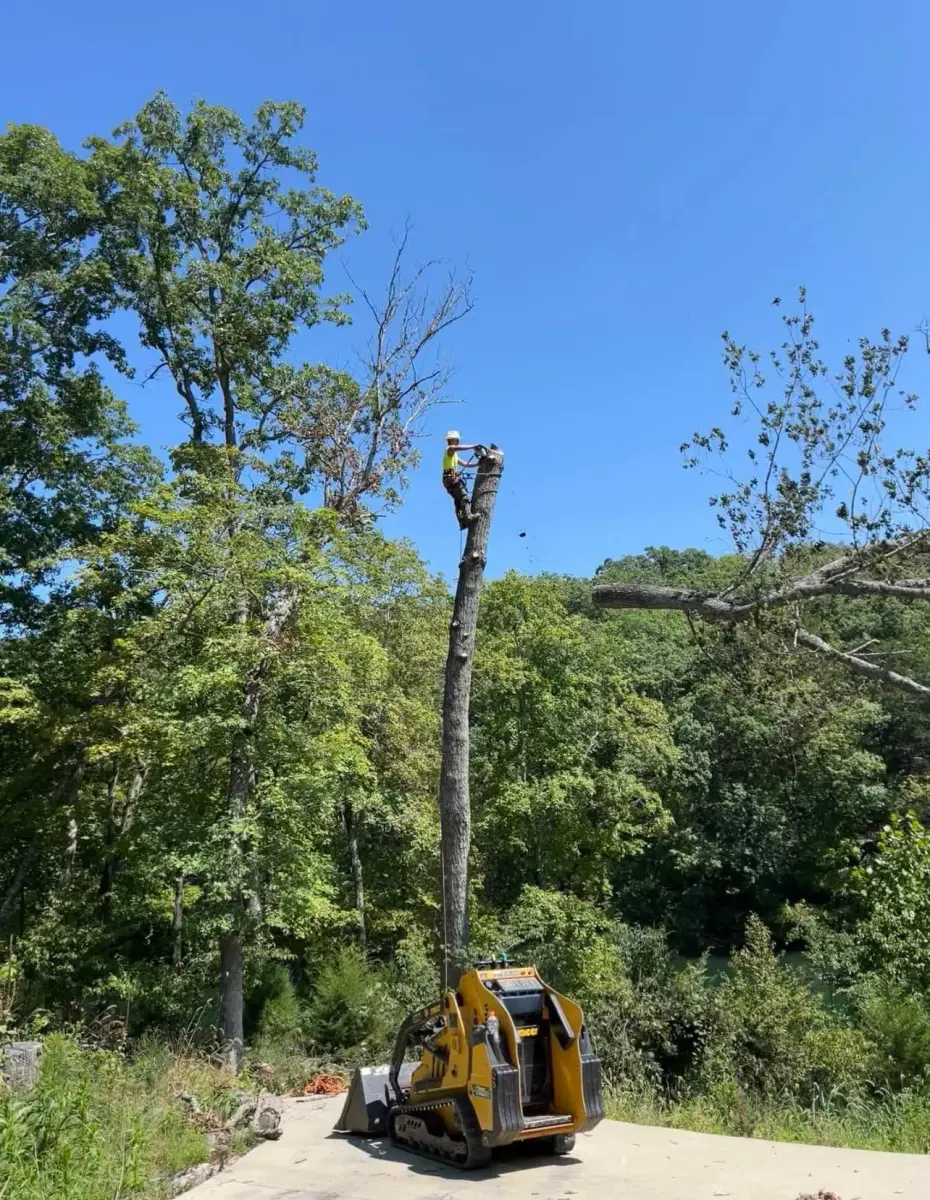
Controlled, rigged takedowns of dead, dying, or unwanted trees, including the very tall ones other crews pass on.
Tree Trimming & Pruning
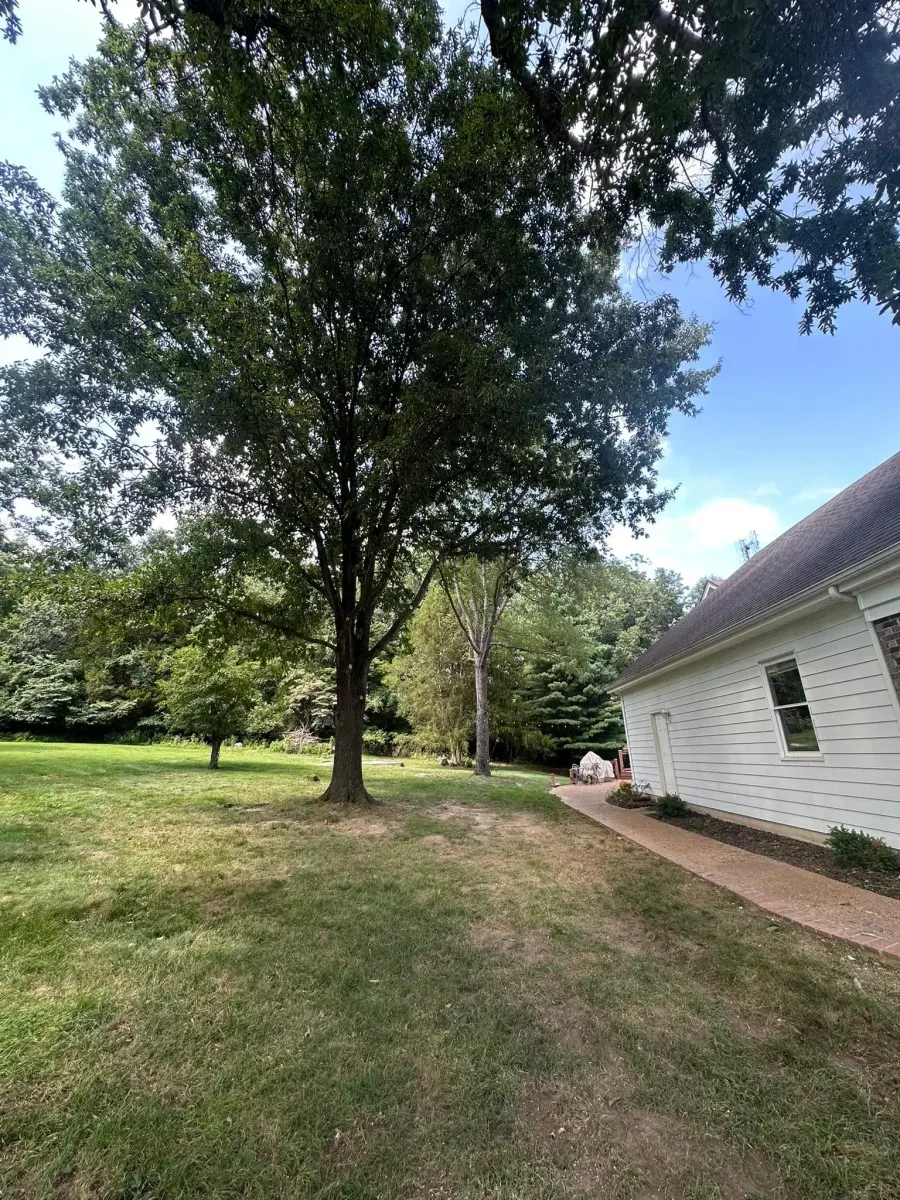
Careful, structure-first trimming that keeps your trees healthy, safe, and looking sharp year after year.
Storm Damage Cleanup
When Missouri storms drop limbs or whole trees, we respond fast, clear the hazard, and leave the property clean.
Worried about a fork in your favorite tree?
Get a free, honest assessment before the next storm decides for you. If the tree can be saved, we will save it.