
Cabling & Bracingin Maryland Heights, MO
Cabling and bracing in Maryland Heights for silver maples with weak forks over the roof, the most common support job we do.
5.0 average from 59+ Google reviews
Silver maples are built for cables
A silver maple grows fast and splits into several trunks at a tight fork, then gets heavy at the ends, which is why Maryland Heights has so many of them coming apart in storms. If the wood at the fork is still sound, a steel cable installed high between the trunks lets them hold each other, and thinning the heavy ends takes the strain off. A tree that would have split in the next storm can stand for many more years.
Baylor climbs and checks the fork first. A maple with decay at the fork, or one that has already dropped a big limb, is usually past a cable, and we tell you that plainly. On a healthy tree the cable goes in high where it works best, and the system is checked again every few years. Dead ash trees are never cabled; they come down.
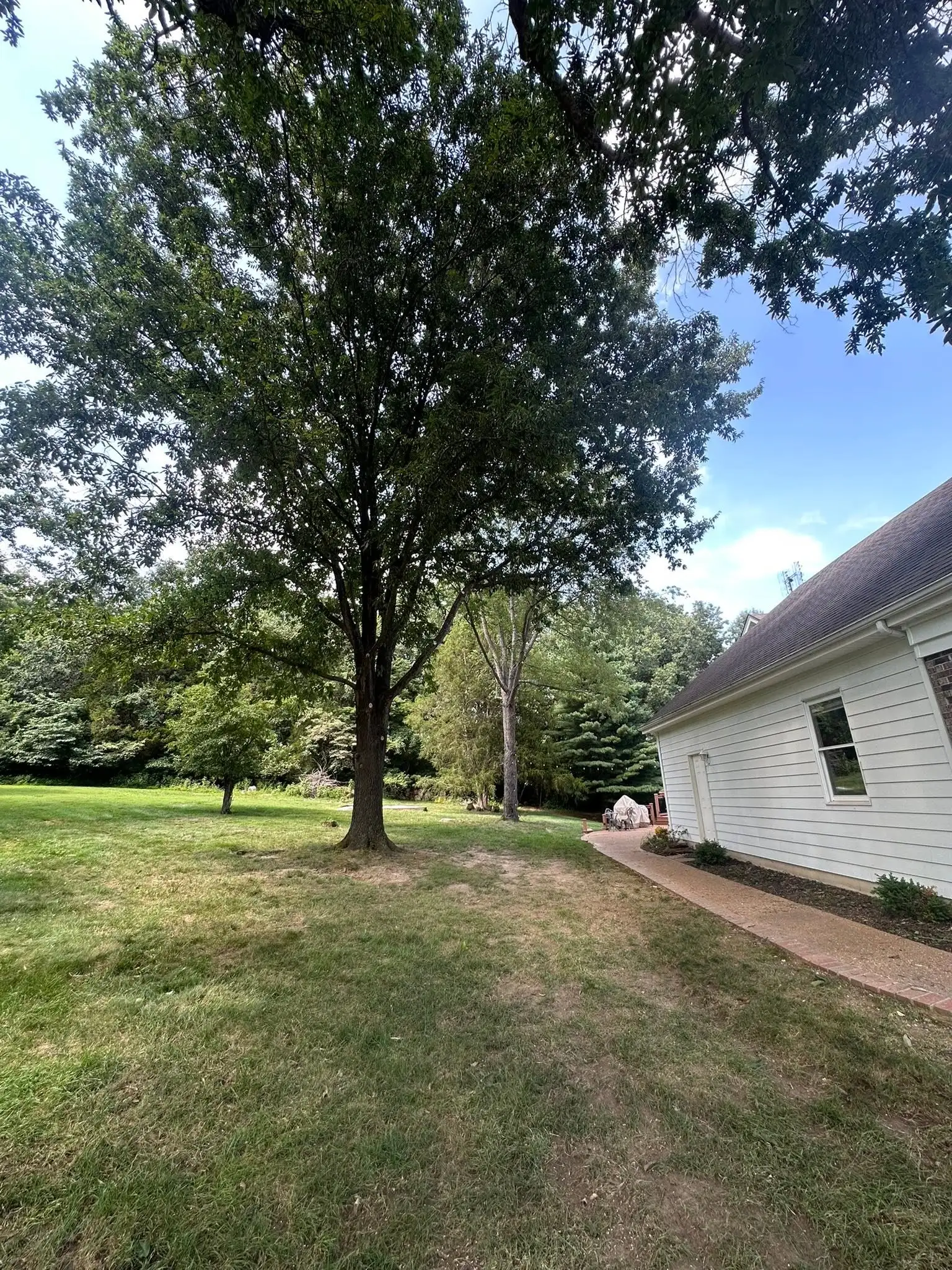
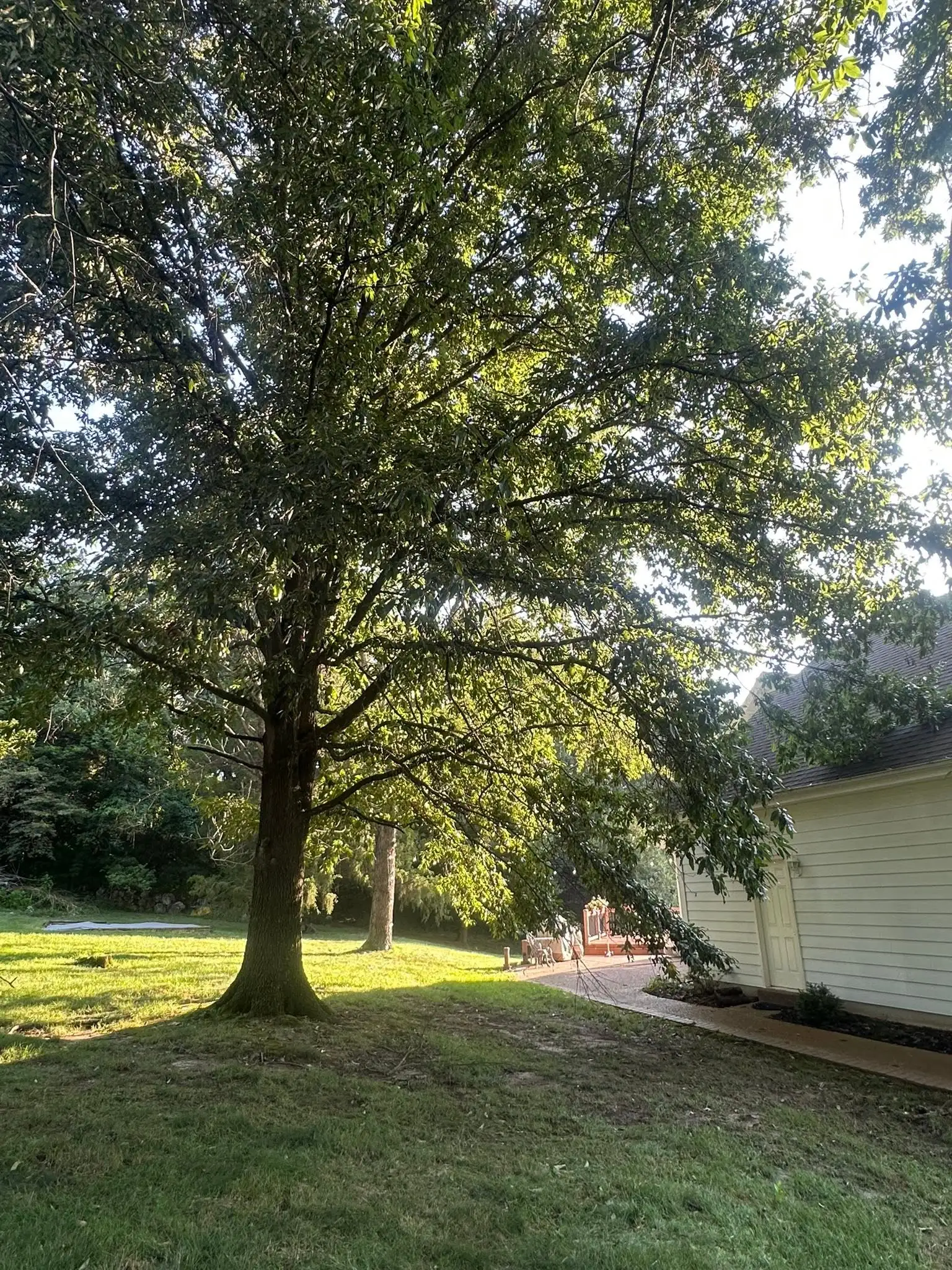
Canopy trim and shaping. Drag the handle to compare.
How we handle it
- 1.
Assess the union
We climb or inspect the fork up close, check for cracks, decay, and included bark, and tell you straight whether support makes sense.
- 2.
Choose the system
Dynamic cable, static cable, brace rods, or a combination, matched to the tree's condition and how much it needs to move.
- 3.
Install high and tight
Hardware goes in at roughly two-thirds of the way up the stems, anchored properly so it strengthens the tree instead of wounding it.
- 4.
Prune and schedule the re-check
We reduce weight on the supported limbs, then set a plan to inspect the system every few years and after major storms.
What sets the price
A support system in Maryland Heights is quoted after we climb and inspect the tree. The price depends on:
Size of the tree
A big oak needs heavier hardware and a longer climb than a young maple.
How many stems to support
Two stems need one cable; three or four need more.
Cable or rod
A cable high in the tree is the common fix; a threaded rod through a cracked fork is added when the split has already started.
Pruning at the same time
Taking weight off the long side usually goes with the cable and is quoted together.
Access
Everything is done by climbing, so a tree in a tight spot takes a little longer.
The full picture of this service is on our cabling & bracing page, and everything we do locally is on the Maryland Heights tree service page.
Working in Maryland Heights
Maryland Heights sits just across the Missouri River from our shop at 211 Hughes Ln in St. Charles, so we can usually look at a tree within a day or two. If a storm has just opened a fork, call quickly; a crack caught early is easier to brace.
Cabling & Bracing nearby
What neighbors say about this work
5.0 average from 59+ Google reviews
Heather Hanson
“Baylor and the boys did an awesome job removing a dead tree from my front yard and deadwooding a few others. They were fast and efficient and the clean up was thorough. Most importantly though, they were honest and didn't try to sell me a bunch of BS that I didn't need. Their quote was so much more reasonable than a few others I got as well. I will definitely be using these guys from here on out for any tree needs! Thanks Baylor!”
Alicia Thompson
“The customer service is impeccable. Responded to my initial inquiry in a timely manner. Reasonable priced. Great service. Great communication. Highly Recommend!”
Mick Schlueter
“BC was very knowledgeable in his field. He executed extreme care when dropping limbs around power lines. Would highly recommend. A+ rating.”
Common questions in Maryland Heights
Is cabling cheaper than removing the tree in Maryland Heights?
Almost always. A cable and a careful pruning on a healthy Maryland Heights tree is a fraction of the cost of taking the tree down and grinding the stump, and you keep the shade. The exception is a tree with decay at the fork, where a cable will not hold and removal is the honest answer.
How do I know if my tree needs a cable?
The usual signs are a tight, narrow fork where two or three trunks meet, a crack or a seam of bark running down into that fork, or a long, heavy limb reaching over the house. If you see any of those, have the tree looked at before the next storm rather than after it.
Will the cable be visible from the ground?
Barely. The cable is installed high in the tree, about two thirds of the way up to where the limbs spread, and once the tree leafs out it is hard to spot. A bracing rod sits inside the fork and is not visible at all.
Do I need a permit for cabling in Maryland Heights?
No. Installing a support system on your own tree does not need a permit in Maryland Heights, and in cities with tree preservation rules, keeping the tree with a cable avoids the approval a removal would need.
Worried about a fork in a Maryland Heights tree?
Get a free, honest assessment before the next storm decides for you. If the tree can be saved, we will save it.